
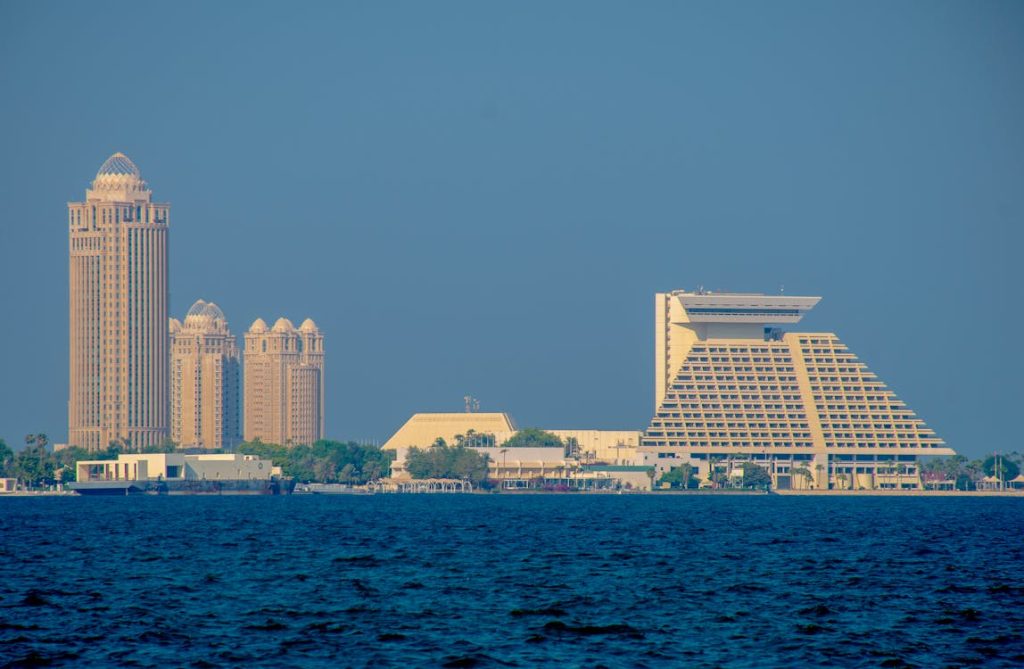
Qatar’s hospitality market has changed in the last three years. Since the 2022 World Cup, hotel guests arriving in Doha — both GCC travellers and international visitors — carry benchmarks set by Dubai, Riyadh, and London. When service drops below those benchmarks, guests do not always complain. They post, switch properties, or simply never come back.
Mystery shopping is how forward-thinking Qatar hotels stay ahead of that silent churn. This guide walks through what a mystery shopping program looks like in practice, which guest-journey touchpoints matter most in the Qatar market, and how findings should translate into action inside 72 hours — not 72 days.
What is hotel mystery shopping?
Hotel mystery shopping is a structured evaluation method where trained shoppers book, stay at, and interact with a property as ordinary guests while recording the experience against a defined set of service standards and key performance indicators (KPIs). The shopper is invisible to the front-line team. The resulting report is objective, comparable between properties or over time, and aligned with how real guests judge the stay.
Unlike online reviews — which are unstructured and skewed by extremes — mystery shopping captures the full journey, including the parts guests rarely mention but silently use to decide whether to return.
What mystery shoppers evaluate in Qatar hotels
A competent hotel mystery shopping program in Qatar covers the full guest journey. At Mystery Masters International (MMI) we break the evaluation into six stages:
1. Pre-arrival
Response time to email and phone enquiries, accuracy of information given, clarity on rates and inclusions, and whether the hotel asks discovery questions about the stay’s purpose.
2. Arrival and check-in
Valet or entrance greeting, lobby wayfinding, time in queue, check-in efficiency, proactive offers (upgrades, restaurant bookings), bilingual ability of the front desk, and accuracy of personal data handling.
3. Room and in-room experience
Cleanliness, minibar, amenities, Wi-Fi speed and pairing, climate control responsiveness, and the quality of the in-room welcome (note, amenities, fruit, water).
4. F&B touchpoints
Breakfast speed and quality, server product knowledge, allergen handling, bar interactions, room-service accuracy and timing.
5. Recovery moments
What happens when something goes wrong — a wrong wake-up call, a slow response, a missed amenity. Recovery is often where loyalty is won or lost, and it is the stage most programs under-measure.
6. Departure and post-stay
Check-out speed, invoice accuracy, luggage handling, and whether the hotel follows up with a thank-you or feedback request within 48 hours.
Which KPIs Qatar hotels should measure
A useful mystery shopping program ties every observation to a measurable KPI. Below are the ten most common KPIs MMI tracks for Qatar hotel clients:
- Enquiry response time (target: under 2 business hours)
- Check-in time (target: under 4 minutes)
- Bilingual Arabic/English capability at front desk (target: 100% of front-line staff)
- Guest name usage frequency (target: at least 3 times during stay)
- Breakfast service time to first drink (target: under 2 minutes)
- Room cleanliness composite score (target: 95% or higher)
- Recovery resolution time when a complaint is raised (target: under 20 minutes for operational issues)
- Staff product knowledge on F&B, spa, and local experiences (target: 80% or higher correct)
- Check-out time (target: under 3 minutes)
- Net Promoter sentiment at post-stay (tracked via mystery shopper debrief, correlated to actual guest NPS)
How MMI runs a hospitality mystery shopping program
At MMI we run hospitality programs as a three-day cycle, not a one-off audit. The signature 72-Hour KPI-to-Training Cycle is built so findings become action before they go stale.
Day 1 — Assess
A certified shopper completes the full guest journey, captures evidence (time-stamped notes, discreet photos where permitted, audio cues where recording is allowed), and submits a structured report against the agreed KPI scorecard.
Day 2 — Analyse
MMI’s AI-assisted Moment of Truth classification clusters the findings into operational themes, ranks them by revenue and brand impact, and updates the client’s bilingual dashboard. The hotel’s general manager sees, at a glance, which service moments drove the biggest variance.
Day 3 — Act
A training action plan goes to the hotel’s operations team, supported by WhatsApp performance alerts for the front-line managers whose teams need immediate coaching. Where the issue is structural (process, layout, technology), MMI flags it for a management follow-up rather than a training fix.
The cycle then repeats monthly or quarterly depending on the tier engaged.
Common service gaps we spot in Qatar hotels
A few patterns recur across the Qatar hospitality market. If you run a property in Doha, West Bay, The Pearl, or Lusail, test your team against these before your next mystery shop:
- Arabic-first moments are underused. Most properties greet Arabic-speaking guests in English by default. The simple switch to an Arabic greeting, followed by a natural bilingual handover, lifts rapport scores measurably.
- Local experience knowledge is shallow. Front desks confidently recommend Souq Waqif and Katara but struggle with deeper asks: a weekday dhow cruise, a family-friendly desert tour at a specific price point, a Friday brunch outside the hotel.
- F&B allergen handling is inconsistent. Breakfast teams are trained, but roaming food and beverage servers often improvise when asked about a specific allergen. This is a regulatory and brand risk.
- Recovery is slow on non-critical issues. Critical recovery (billing, safety) is handled well. Lower-stakes issues (wrong pillow, missing amenity) are frequently acknowledged but not actioned for hours.
- Post-stay follow-up is mechanical. Many hotels send a feedback email within 48 hours, but the message is templated, never personalised with a detail from the stay, and rarely leads to a second interaction.
How to act on findings in 72 hours
The value of mystery shopping is not the report — it is what happens after. The most common mistake Qatar hotels make is accepting a monthly mystery shopping report, filing it, and running a training session six weeks later.
MMI’s cycle closes that gap in three moves:
First, the dashboard surfaces only the KPIs that moved materially since the last audit, so management attention is spent on what changed — not on reading 40-page reports.
Second, WhatsApp alerts are delivered to the specific shift supervisor whose team drove the variance, within the same day. The alert names the behaviour, not the individual, and links to a 90-second coaching script.
Third, a 72-hour training micro-session is scheduled on-property. These are short, specific, and role-based — front desk, housekeeping, F&B — rather than generic service classes. Role-based micro-training outperforms generic training on retention by a wide margin.
Frequently asked questions
How long does a single hotel mystery shop take to deliver?
From visit to report: 48 hours. From report to training plan: 72 hours. For ongoing programs the cadence is usually monthly.
Do shoppers record conversations or take photos?
Only where legally permitted and approved by the client. Where recording is not appropriate, shoppers rely on structured debrief notes taken discreetly after each interaction.
Can mystery shoppers be detected by trained front-desk teams?
MMI uses bilingual shoppers with travel profiles that match the hotel’s real guest mix — corporate, leisure, GCC resident, international visitor. Detection rates across our Qatar hospitality engagements stay below 3%.
Is this compliant with Qatar labour and privacy law?
Yes. MMI operates under the Qatar Financial Centre (QFC) and builds every engagement against Qatar’s Personal Data Privacy Protection Law (Law No. 13 of 2016) and hospitality sector guidance.
Ready to see your hotel through a guest’s eyes?
If you run a hotel, serviced apartment, or F&B venue in Qatar and want a structured, bilingual, 72-hour mystery shopping program tailored to your property, we are ready to brief you.
- See our hospitality mystery shopping service — full scope, KPIs, and deliverables.
- Review pricing and tiers — Essentials, Performance, and Enterprise.
- Contact MMI — book a 20-minute scoping call.